Greece
Corfu
We visited in May
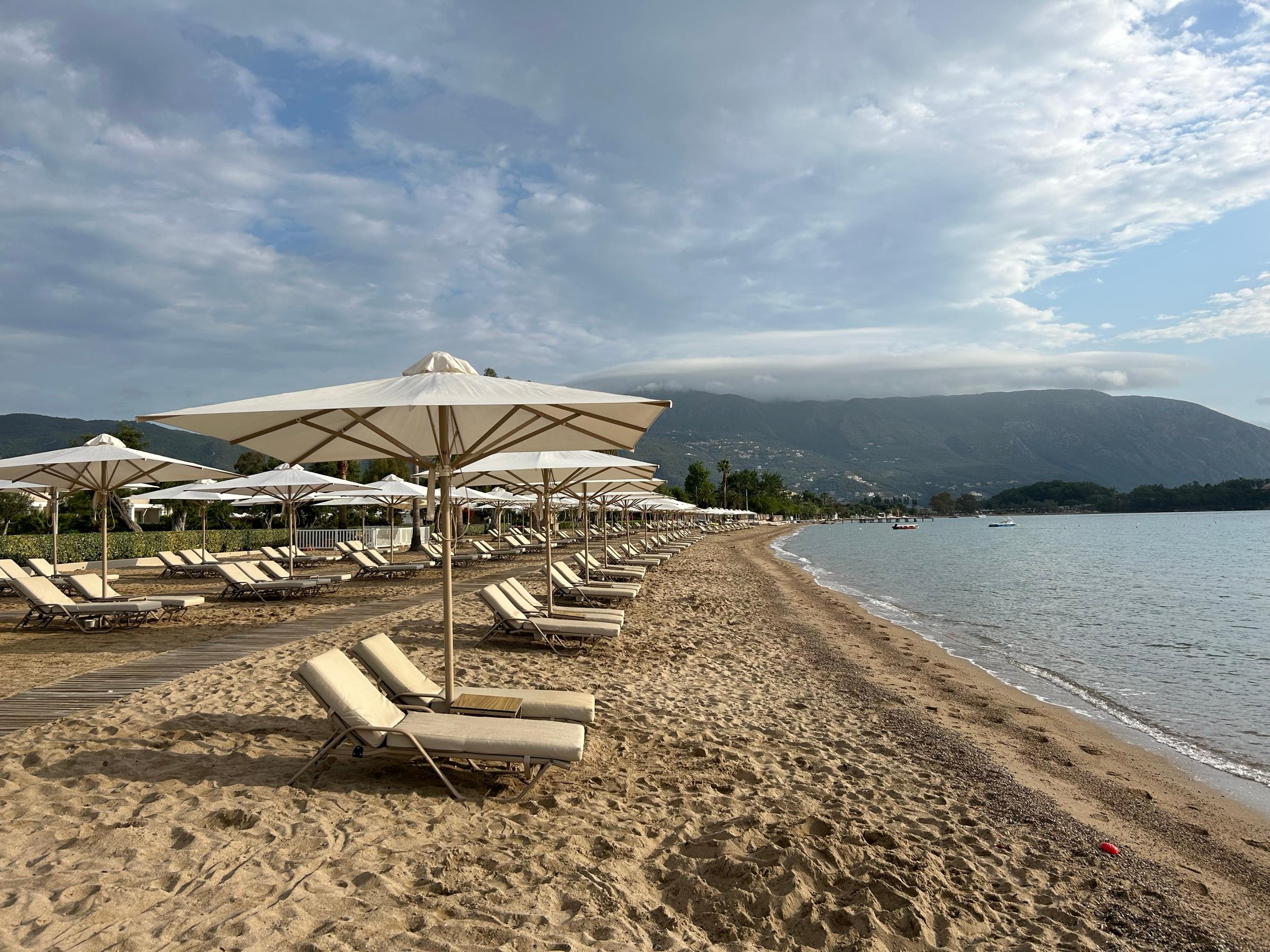
Corfu is the green one of the Ionian islands, and green like that is paid for in rain. Pine and cypress cover the hills, with close to four million olive trees below them, planted under the Venetians. We went in May and had a bit of the rain between spells of late-spring sunshine; it spoiled nothing. The sea then is 18 or 19 degrees, cool enough that getting in takes a decision, and the hotels and tavernas that shut in mid-October have opened again. July and August are hotter and almost dry. From November to March the rain is at its heaviest, most of the coast closes, and Corfu Town has the island to itself.
Most people come for a beach, which makes Corfu Town the place to visit and the wrong place to stay. The east coast, where we stayed, looks across a narrow strait to the Greek mainland, with calm, sheltered water and a short transfer. The west has the cliffs, the rougher seas and the sunsets, and the north the long sandy beaches. The south has Kavos for the nightlife, and quieter villages beside it for the morning after.
The old town is worth a day: a UNESCO-listed knot of narrow kandounia streets between the Old and New Fortresses. Corfu was Venetian, then French, then British, and the town kept something from each. Coffee on the Liston comes under French-style arcades, facing the cricket ground the British laid out on the Spianada and left behind, and the lighthouse on the Old Fortress has the view. Across the island, about 40 minutes away, Paleokastritsa has a monastery above its beach and boats that go round the sea caves.
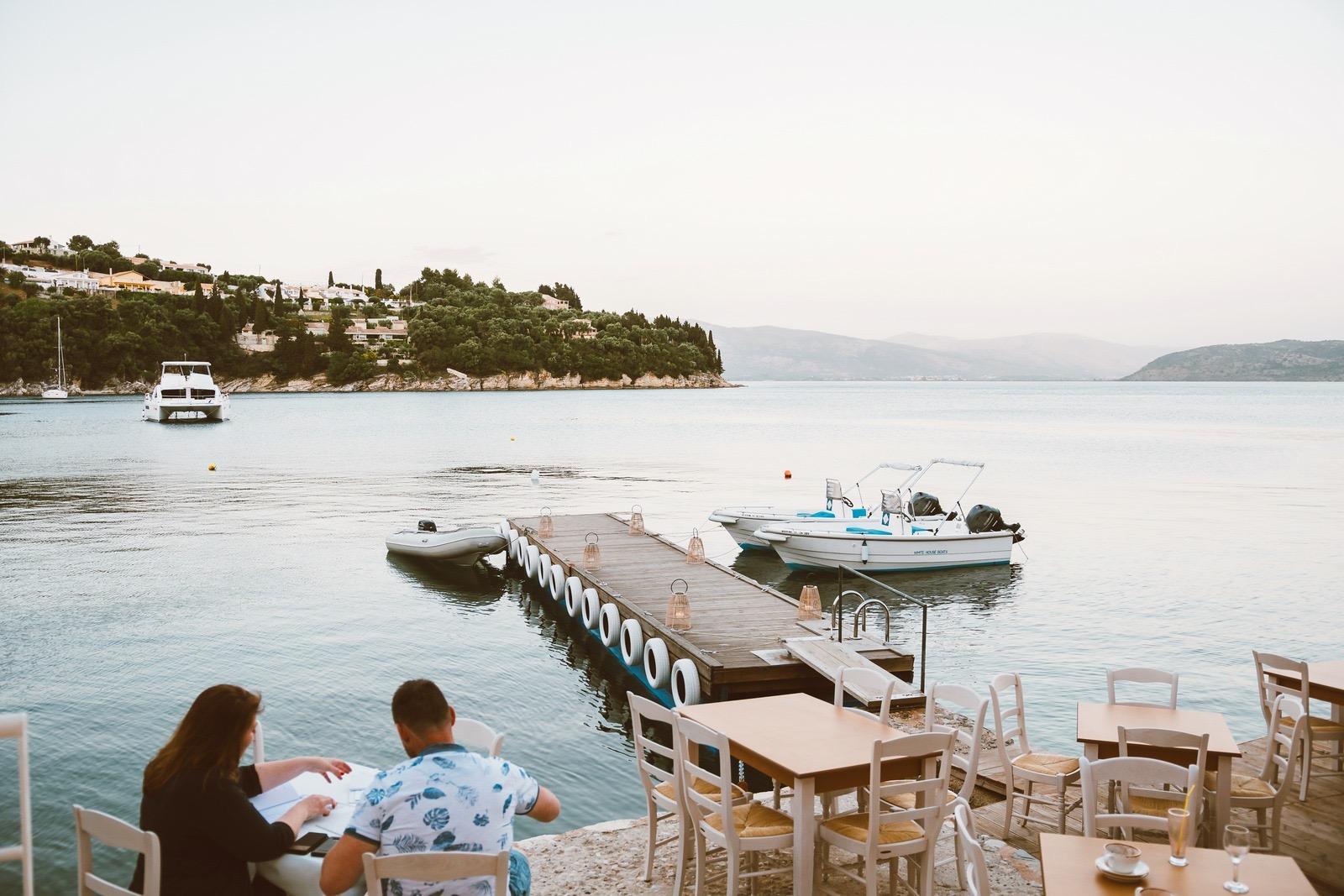
A five-month-old is not much of an explorer, and we did not get out much. The trip we did make was up the coast to Kalami, a small cove under Mount Pantokrator, to eat at the White House. Lawrence Durrell lived there, in a former fisherman's cottage facing the sea, and wrote much of Prospero's Cell; the bay was later a location for the television series about his family. The ground floor is a stone-built taverna now, with the whole bay in front of it, and the Greek meze we had there was a match for the setting. It is the view Durrell had to write in front of, which seems a lot to ask of a man with a deadline.
- Best months
- May, June and September
- Avoid
- November to March, when most coastal resorts and tavernas close for winter and the rain is heaviest
- Nearest airport
- Corfu (CFU), Ioannis Kapodistrias International Airport
- Transfer
- about 10-15 minutes to Corfu Town; around 30 minutes to Dassia on the east coast; up to an hour to the north coast resorts around Sidari and Kassiopi
Neighbourhoods
Where to stay
5 hotels
5 hotels
 Grown-up
Domes Miramare, a Luxury Collection Resort, Corfu
£££Corfu, Greece
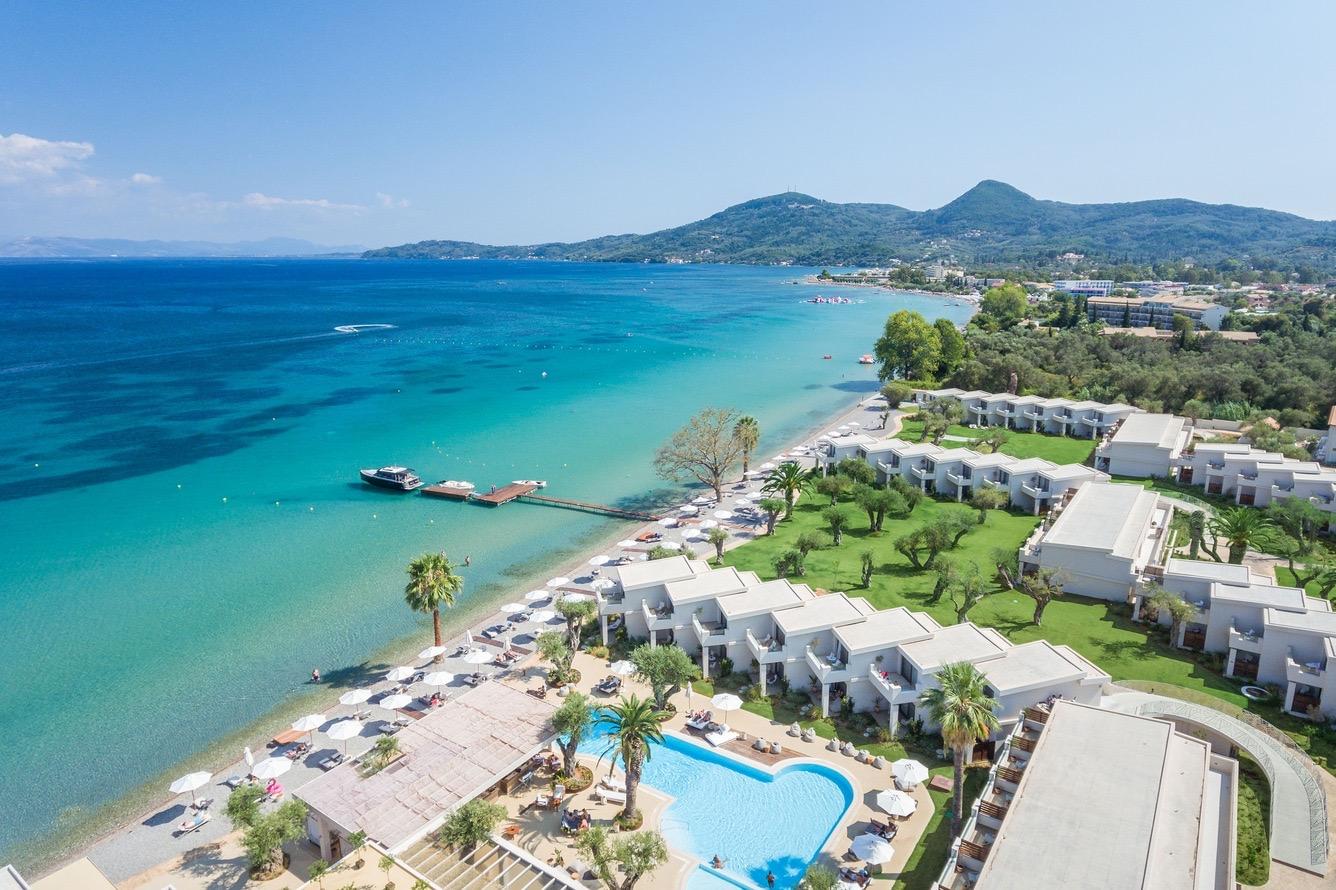
Waterfront Pavilions with a pool or a jacuzzi on the deck and the Ionian beyond it, at a modernist beach hotel built for the Onassis family south of Corfu Town.
 Grown-up & family
Domes of Corfu, Autograph Collection
££Corfu, Greece
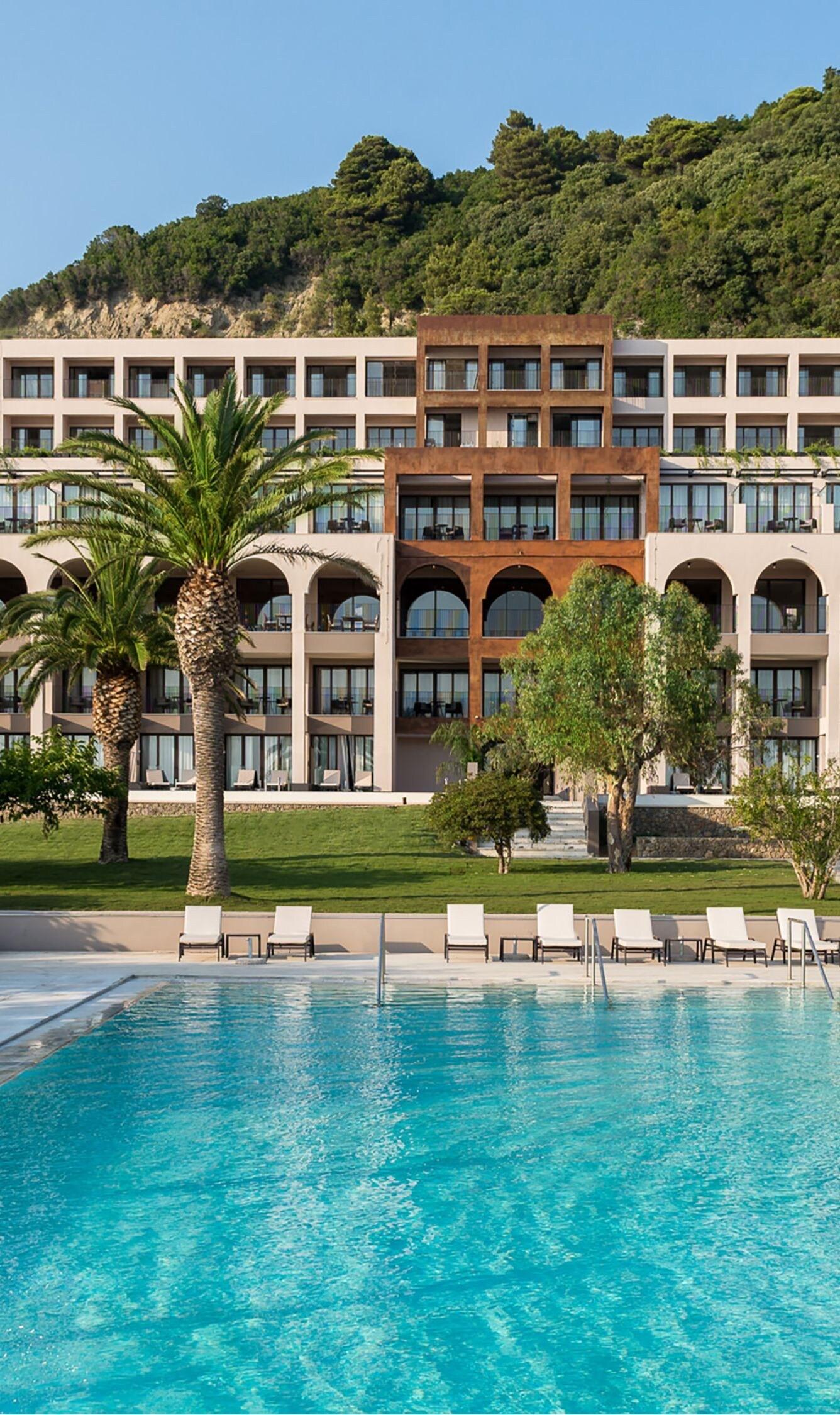
Glyfada's former Grand Hotel, where the grown-ups get a pool beside the spa and the children get a bucket that fills and tips over whoever is standing beneath it.
 Grown-up & family
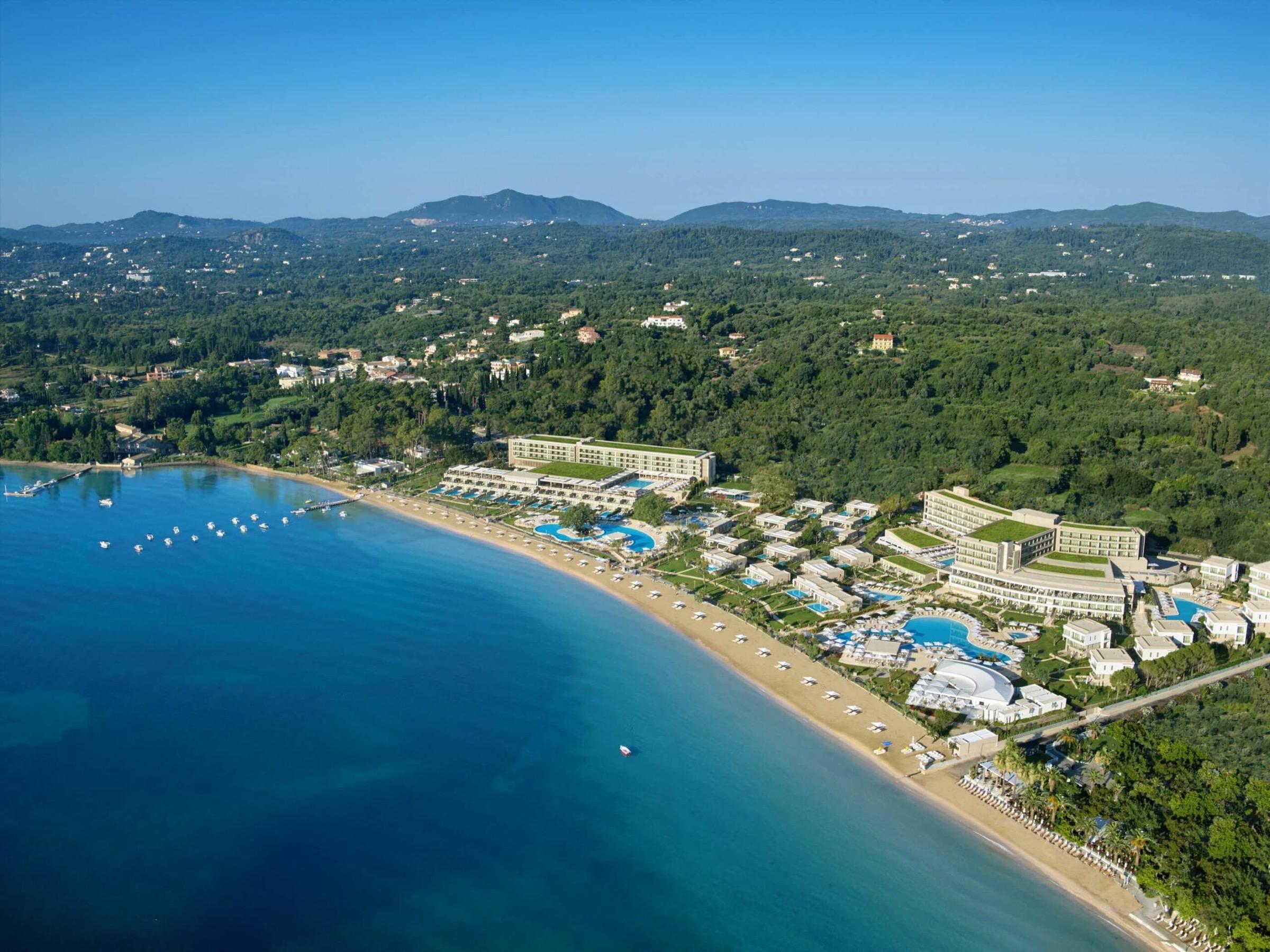
Ikos Dassia
££££Corfu, Greece
An all-inclusive on 600 metres of Corfu sand, with a bungalow option that buys you a private pool and, if you are travelling with a baby, your evenings back.
 Grown-up
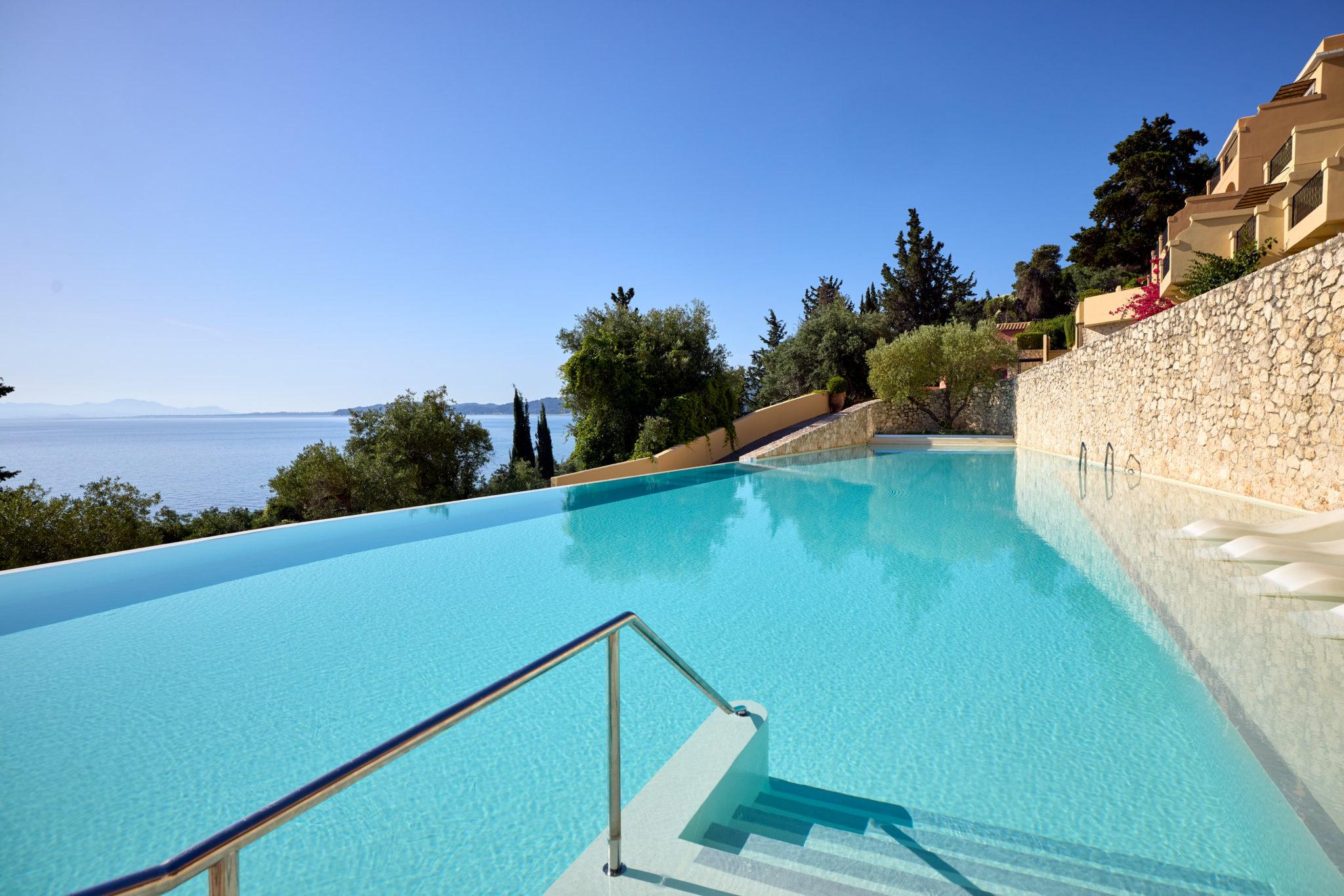
Nido, Mar-Bella Collection
£££Corfu, Greece
An early-twentieth-century Corfiot village built in 2018 from details of Corfu's Old Town, with a pebbled beach of its own at the foot of the hill.
 Grown-up & family
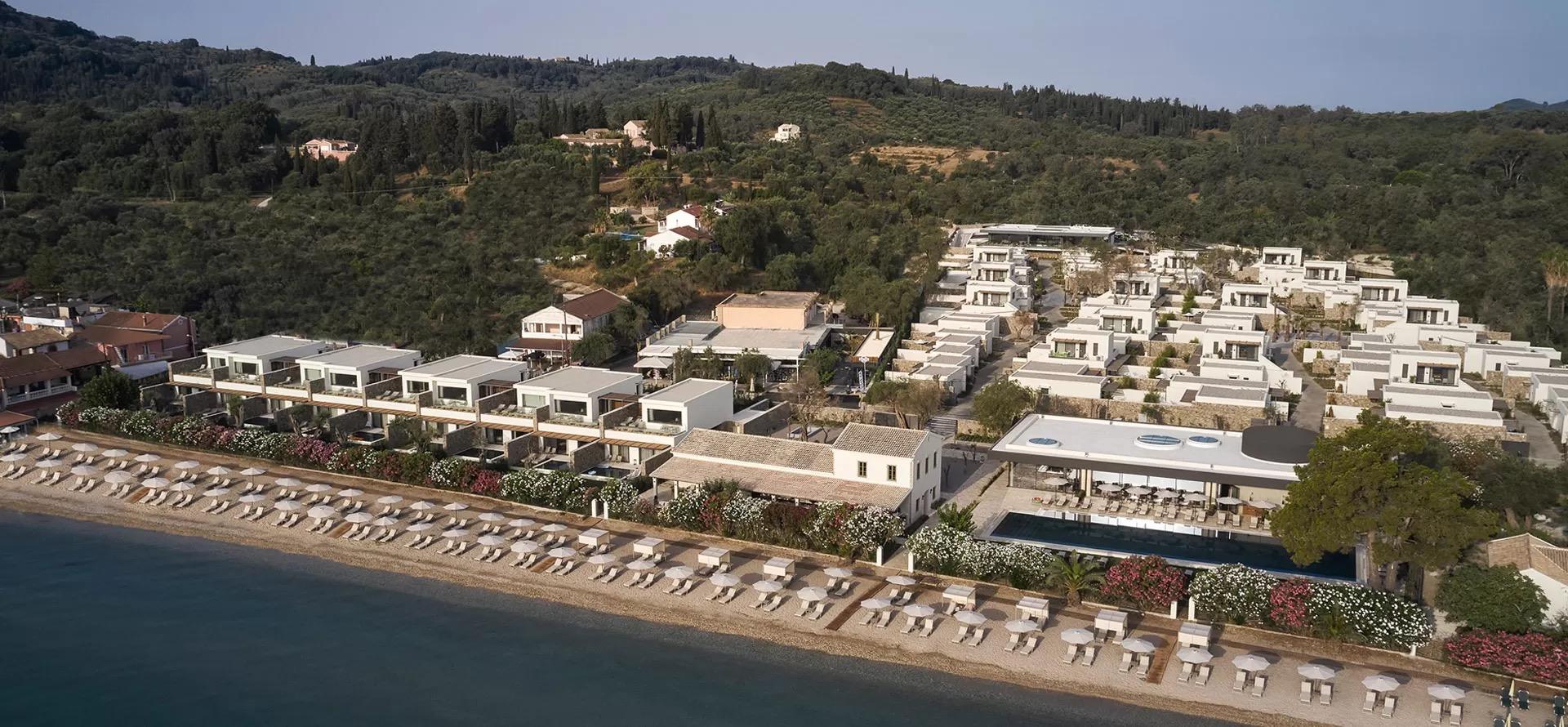
The Olivar Suites
££Corfu, Greece
On Corfu's south coast an 18th-century olive mill keeps its cogs and levers and pours wine among them, with 120 suites in the grove around it, most with a pool of their own.
Where to eat
4 restaurants