
Greece
Paros
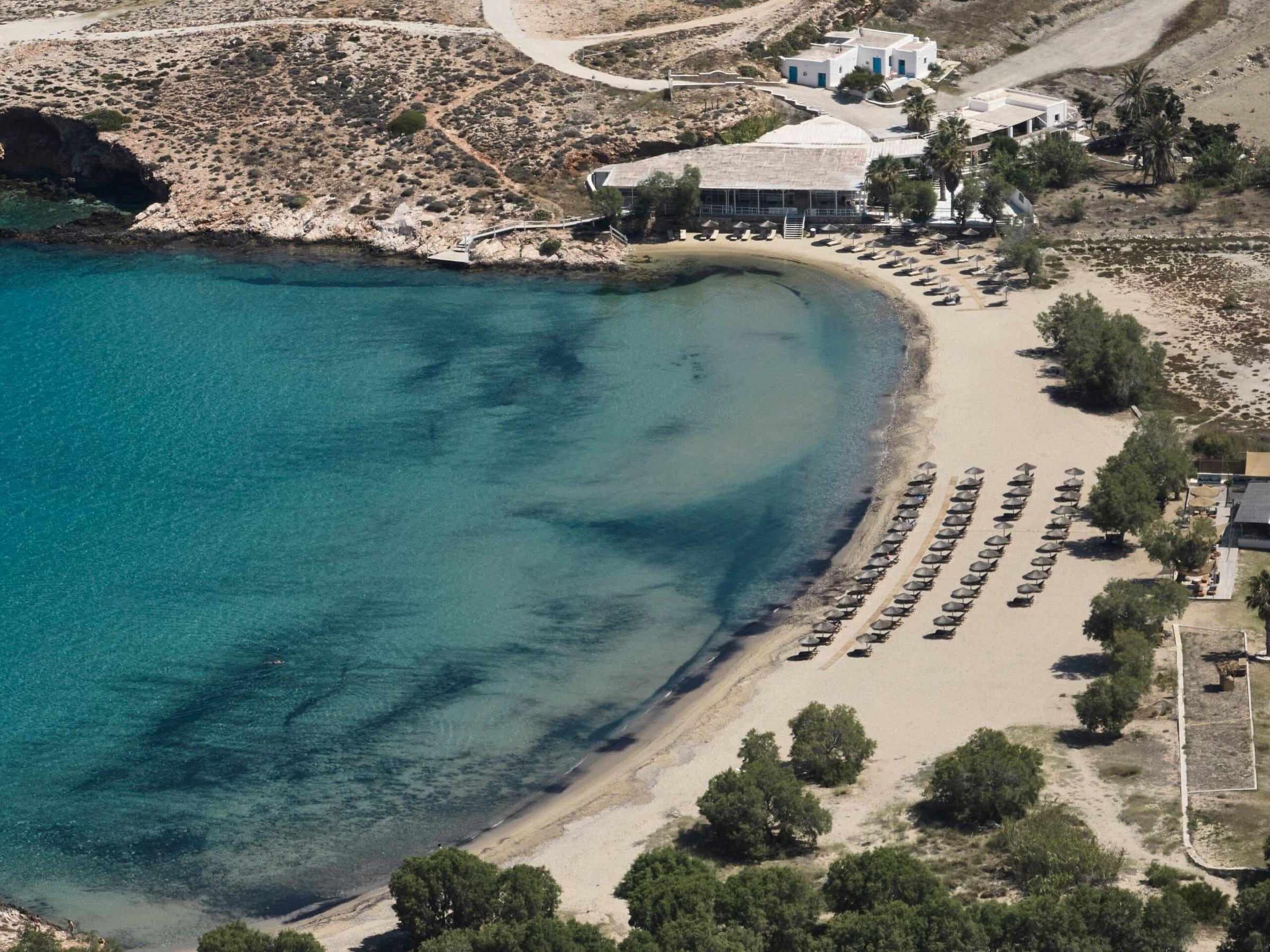
The marble for the Venus de Milo was cut at Marathi, inland on Paros, and the abandoned quarries are still there. The whole island is a hill of white marble rather than the volcanic rock of its more famous neighbours in the Cyclades, and the stone was its trade long before the design hotels arrived. In Parikia, the port, a Venetian duke built the Kastro in the 13th century on the hilltop where a temple to Athena had stood, and set ancient marble and columns into his walls, where they still are. Recycling on Paros started early.
Most people stay in Naoussa, on the north coast. It was a fishing harbour, and the caiques still tie up at the stone jetty; the bars and tavernas have moved in around them and made it the best night out on the island. Most of the small design hotels are here as well, and so, by no coincidence, are the highest prices on Paros. Kolympithres is a short drive or a local bus away, granite boulders carved by the wind with small clear coves between them. The east coast, facing Naxos, is quieter and lower-built, fishing villages like Marpissa and Piso Livadi with family beaches. Aliki, by the airport, is plain tavernas and quiet sand for anyone Naoussa is too much for. Parikia is a sound base for day trips, if not the prettiest place to wake up.
Lefkes, on a hillside in the middle, was the capital before Parikia took over, and its cobbled streets look out across the interior: an afternoon, not a stay. From there the Byzantine Road runs on marble paving to Prodromos, about an hour and a half on foot past olive groves and old watermills, the island's stone at walking pace. Antiparos is a short ferry from Pounda or Parikia, for its cave and quieter beaches. Whatever the day was, it ends back at Naoussa.
June and September are the months: warm enough for the beach, with thinner crowds and lower rates. July and August are the hottest weeks and the most crowded, the meltemi picks up across the Aegean, and prices peak. Paros is no place for winter sun. From November to April the hotels close, flights from Athens drop from several a day to around one, and ferries from Piraeus from five or more sailings to one or two. For half the year the island is left to the people who live there.
- Best months
- June and September
- Avoid
- November to April, when the island's hotels close for the season and flights and ferries thin sharply
- Nearest airport
- Paros National Airport (PAS)
- Transfer
- about 20-25 minutes by road to Naoussa, 10 minutes to Parikia
Neighbourhoods
- the east coast
- Aliki and the south
- Lefkes and the interior
Where to stay
3 hotels
3 hotels
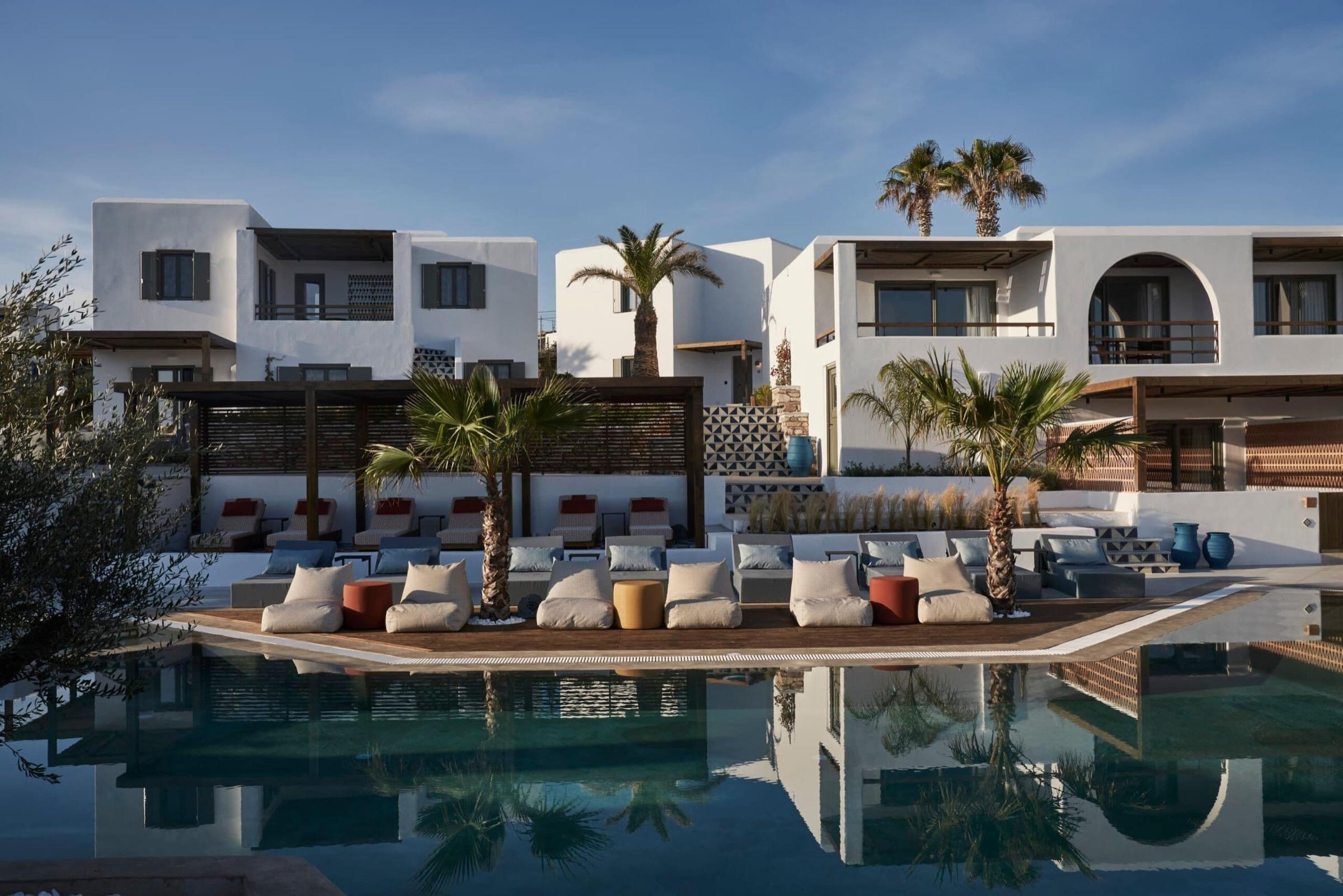 Grown-up & family
Andronis Minois
£££Paros, Greece
On the quiet west coast of Paros, the Andronis family's whitewashed suites face a palm-lined pool by day and, from Olvo's terrace at dinner, a headland running out into the bay.
 Grown-up
Cove Paros
£££Paros, Greece
Daybeds out on pale platforms in the infinity pool, and below them a cove of fine sand and shallow water, ten minutes' walk from Naoussa's harbour.
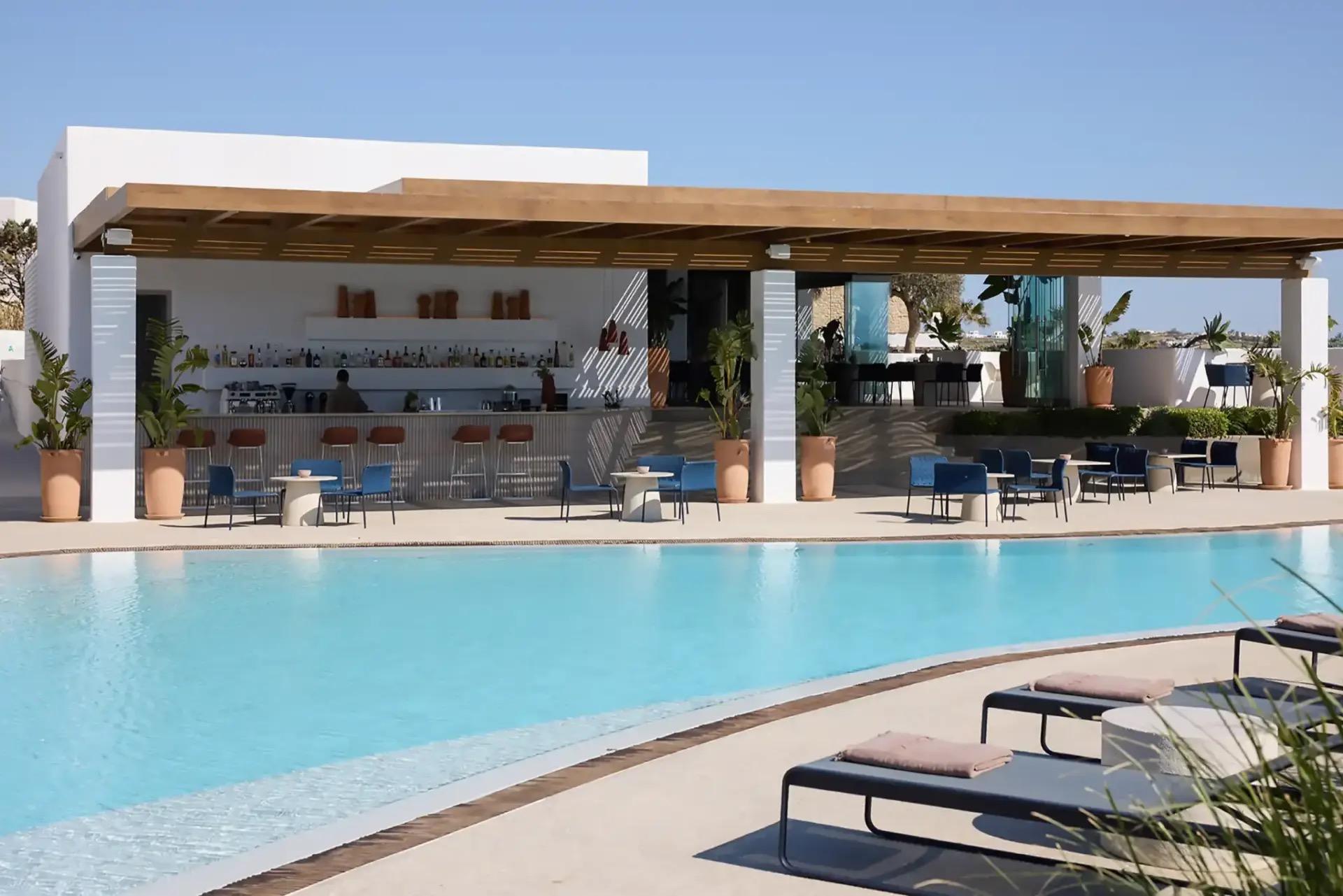 Grown-up & family
Parocks Luxury Hotel & Spa
£££Paros, Greece
At Parocks every room has a pool or an open-air jacuzzi of its own, on a cliff above Ambelas with the mountains of Naxos laid out across the strait.