Greece
Mykonos
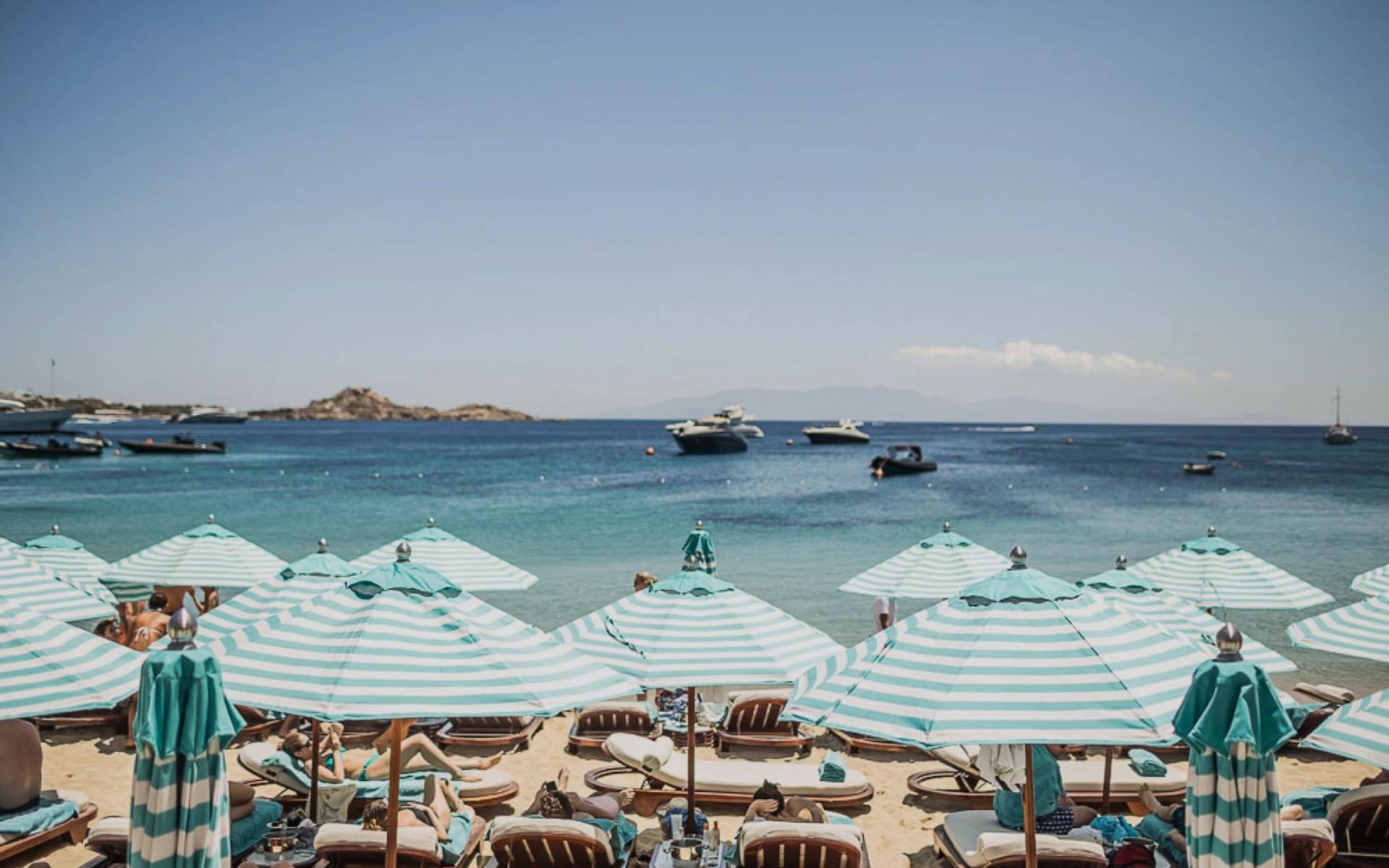
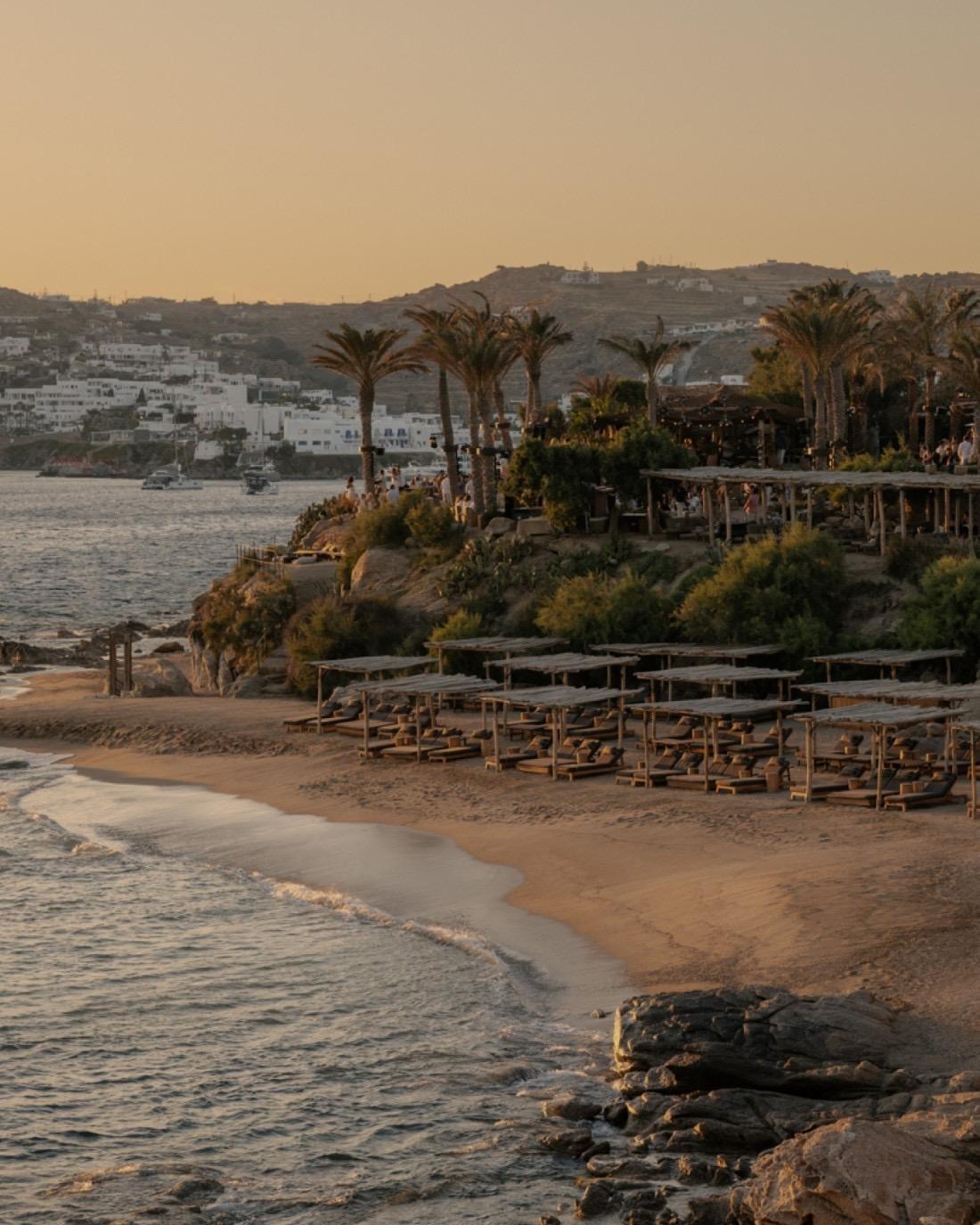
On Mykonos the beach clubs keep to the side the wind leaves alone. The south coast, seven to ten minutes by car from town at Ornos, Psarou and Platis Gialos, is sheltered, and where the island has done most of its building: the clubs, the water taxis between the bays, and more hotels than anywhere else. The south-east coast, twenty minutes out, gets the weather instead. Kalafatis puts it to work for windsurfers, and Elia and Kalo Livadi have longer beaches with far fewer people on them.
The wind is the thing to plan around. The Meltemi blows hardest in July and August, hard enough to close the north-coast beaches and hold up the ferries, and August adds the biggest crowds and the highest prices, so the island is at its fullest as the weather is at its worst. Book late May to mid-June or mid-September to mid-October: 22 to 28°C, the sea still swimmable, most places open and prices 20 to 40% lower. From November many of the hotels, restaurants and beach clubs close, and most of them wait for May.
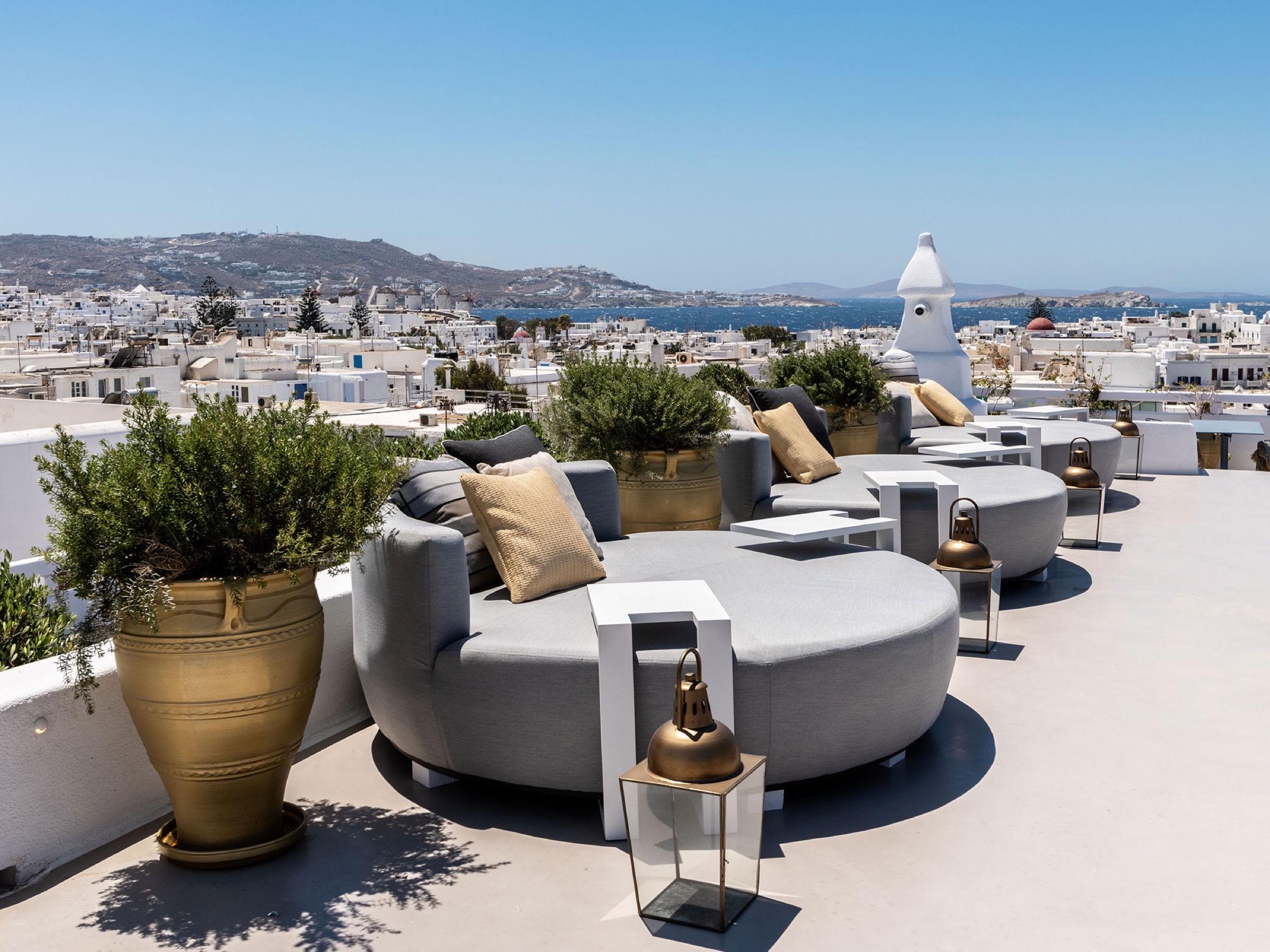
Mykonos Town is a whitewashed maze of lanes too narrow for cars, with the island's restaurants and bars on the doorstep, and it is loud after dark. Stay there to walk home from dinner, and expect to hear everyone else doing the same. Aleomandra, the hillside above Ornos, swaps beach bars for villas and private pools and looks out to Delos. The south coast suits anyone who wants a beach club for a neighbour; the south-east coast, anyone who would rather have room on the sand.
A day in town goes on foot: up through the lanes to the five surviving windmills at Kato Mili, then down into Little Venice for a drink at sunset on a balcony built out over the water. A day on the south coast is lunch at a beach club, Nammos on Psarou or Scorpios on Paraga, and lunch is a loose term: the afternoon runs long and turns into a party as it goes. For the sunset without the party, the west coast at Agios Sostis and Agios Ioannis is quieter, with Delos in view. The morning boat there leaves from the Old Port, about thirty minutes each way, for the island where Apollo was said to have been born. Nobody lives on it, and it shuts on Mondays, which makes it the one island in sight that keeps regular hours.
- Best months
- Late May to mid-June, and mid-September to mid-October
- Avoid
- August, the most crowded and expensive month, and when the Meltemi wind is strongest
- Nearest airport
- Mykonos (JMK)
- Transfer
- 10 to 15 minutes to Mykonos Town, longer in July and August traffic
Neighbourhoods
Where to stay
5 hotels
5 hotels
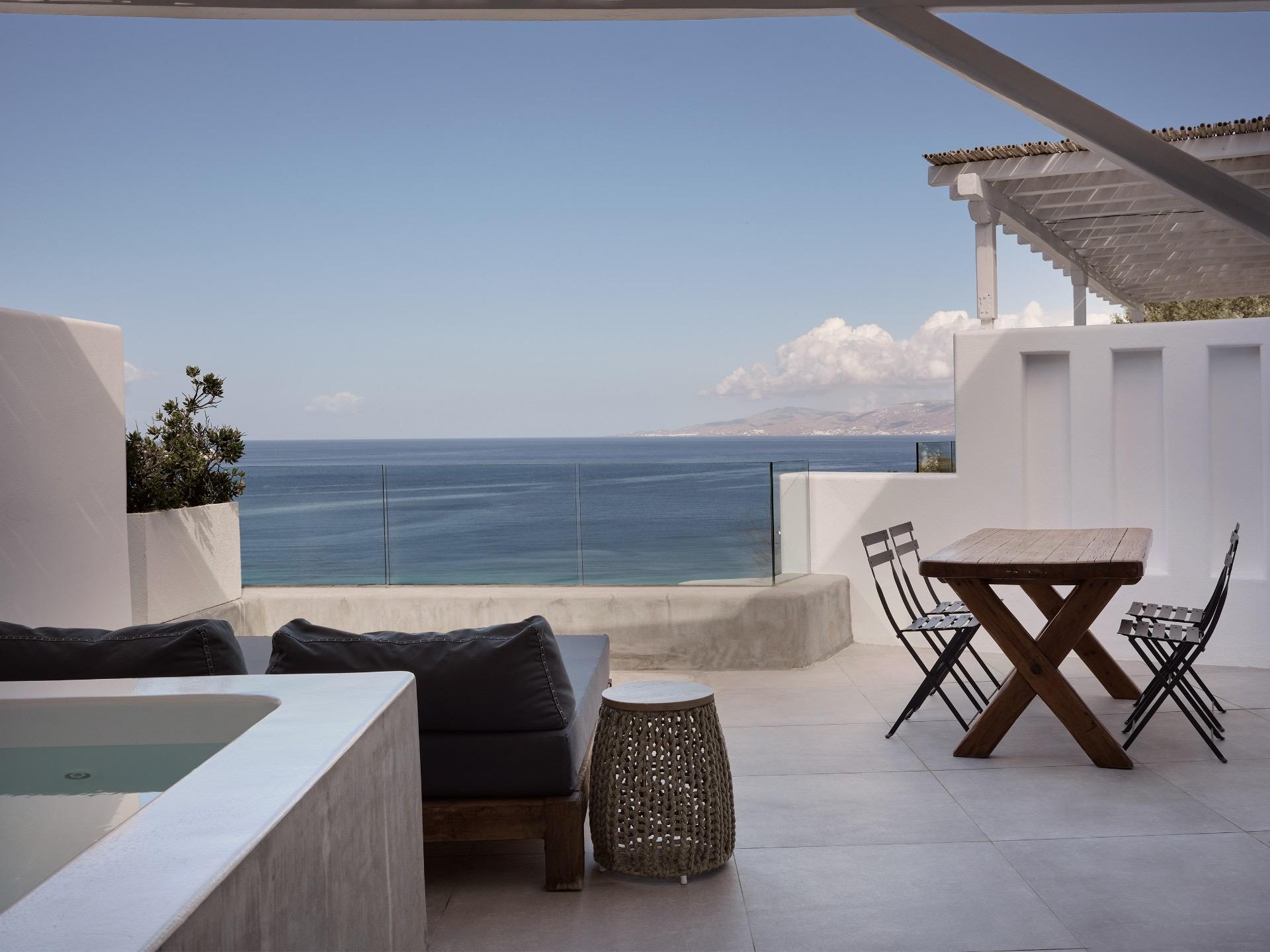 Grown-up
Boheme
£££Mykonos, Greece
A heated plunge pool on a corner terrace open to the Aegean on three sides, 300 metres on foot from the windmills of Mykonos Town.
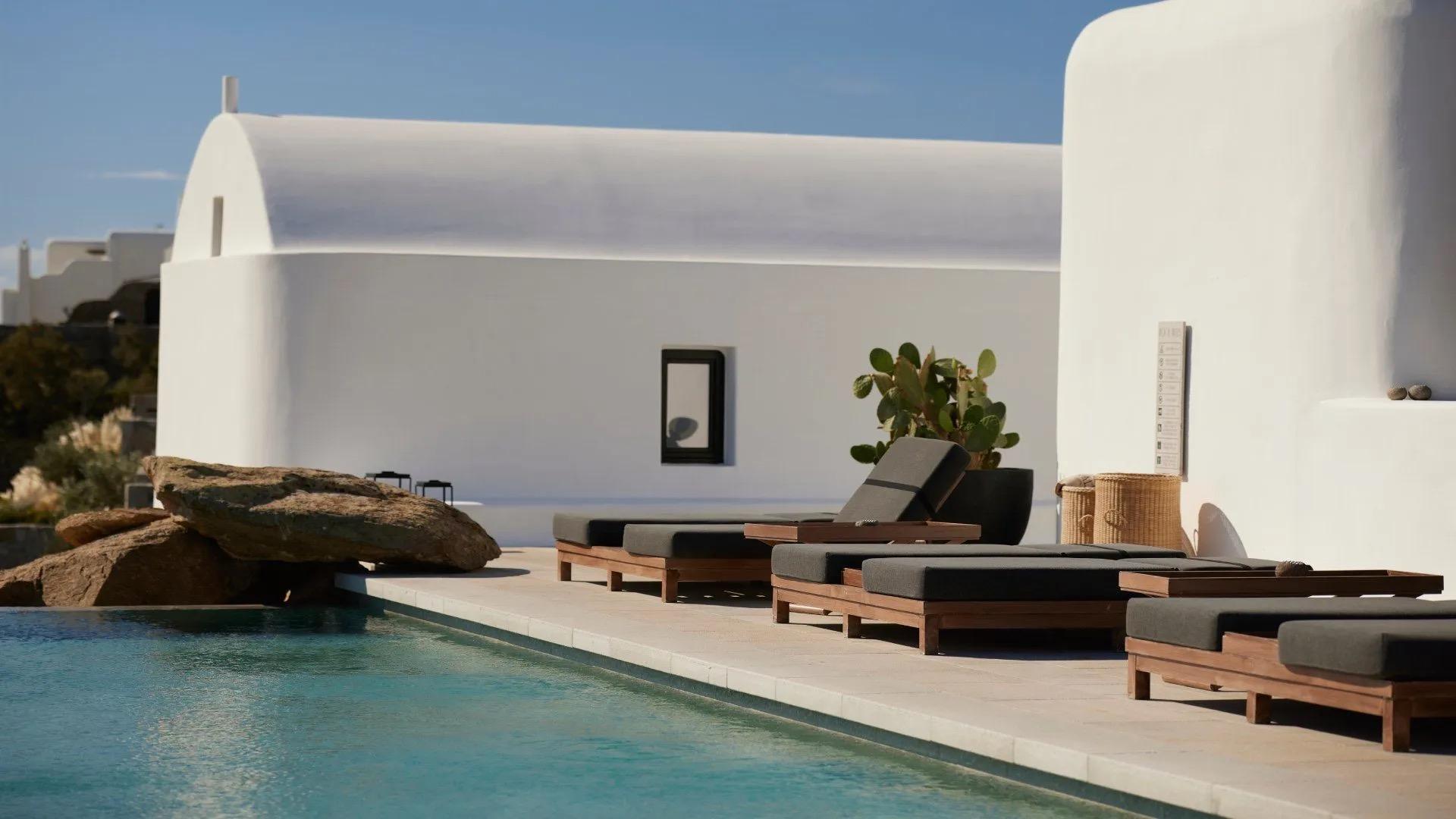 Grown-up & family
Kalesma Mykonos
£££Mykonos, Greece
A whitewashed Cycladic village on the hill facing Delos, where the private pools are kept at 23°C and the chapel at its centre is black inside, with traces of gold.
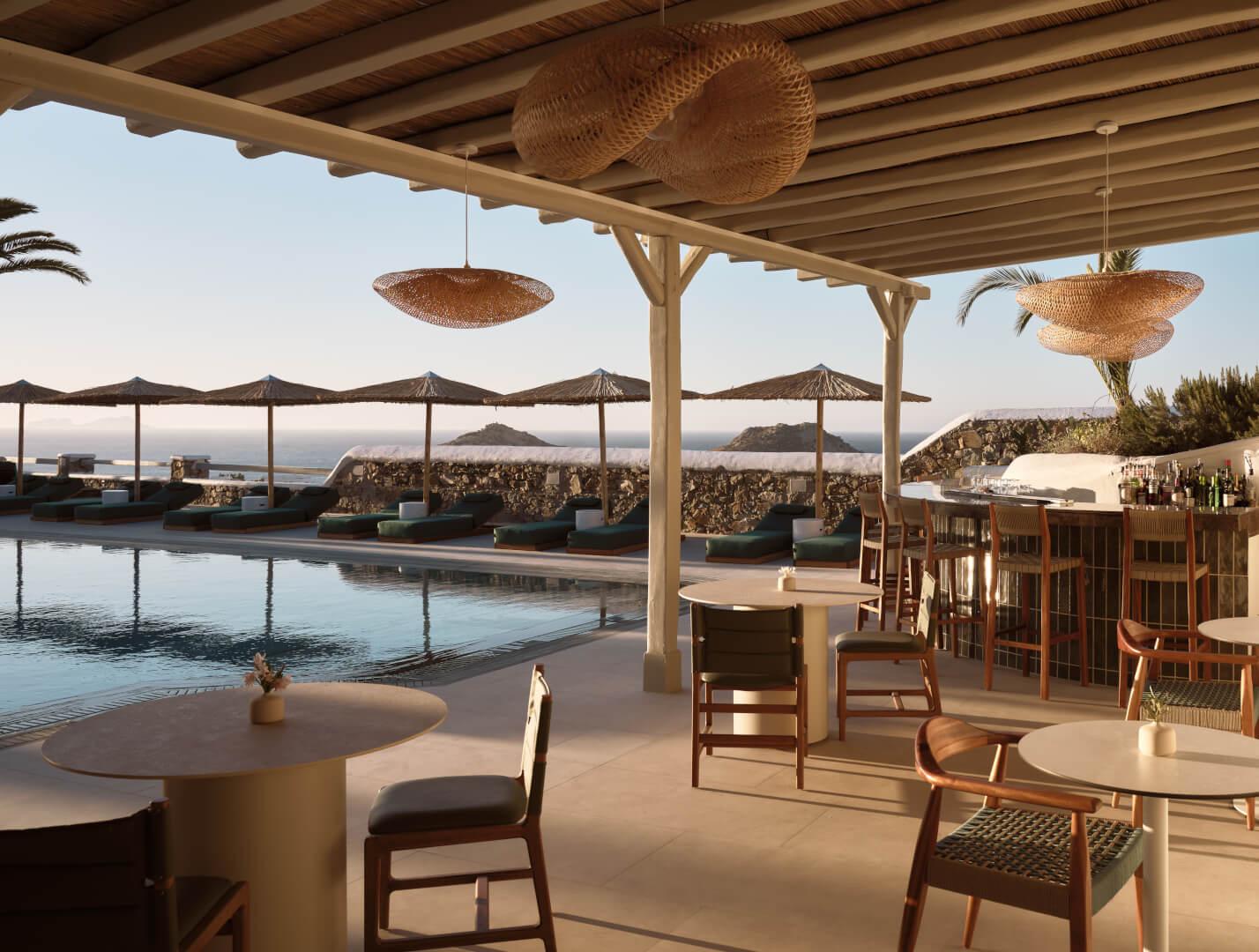 Grown-up
NUMO Mykonos Boutique Resort
££Mykonos, Greece
An old Mykonian building taken back to the 1960s and '70s in mustard-and-white stripes, with Kalafatis Bay, where the island goes windsurfing, over the pool wall.
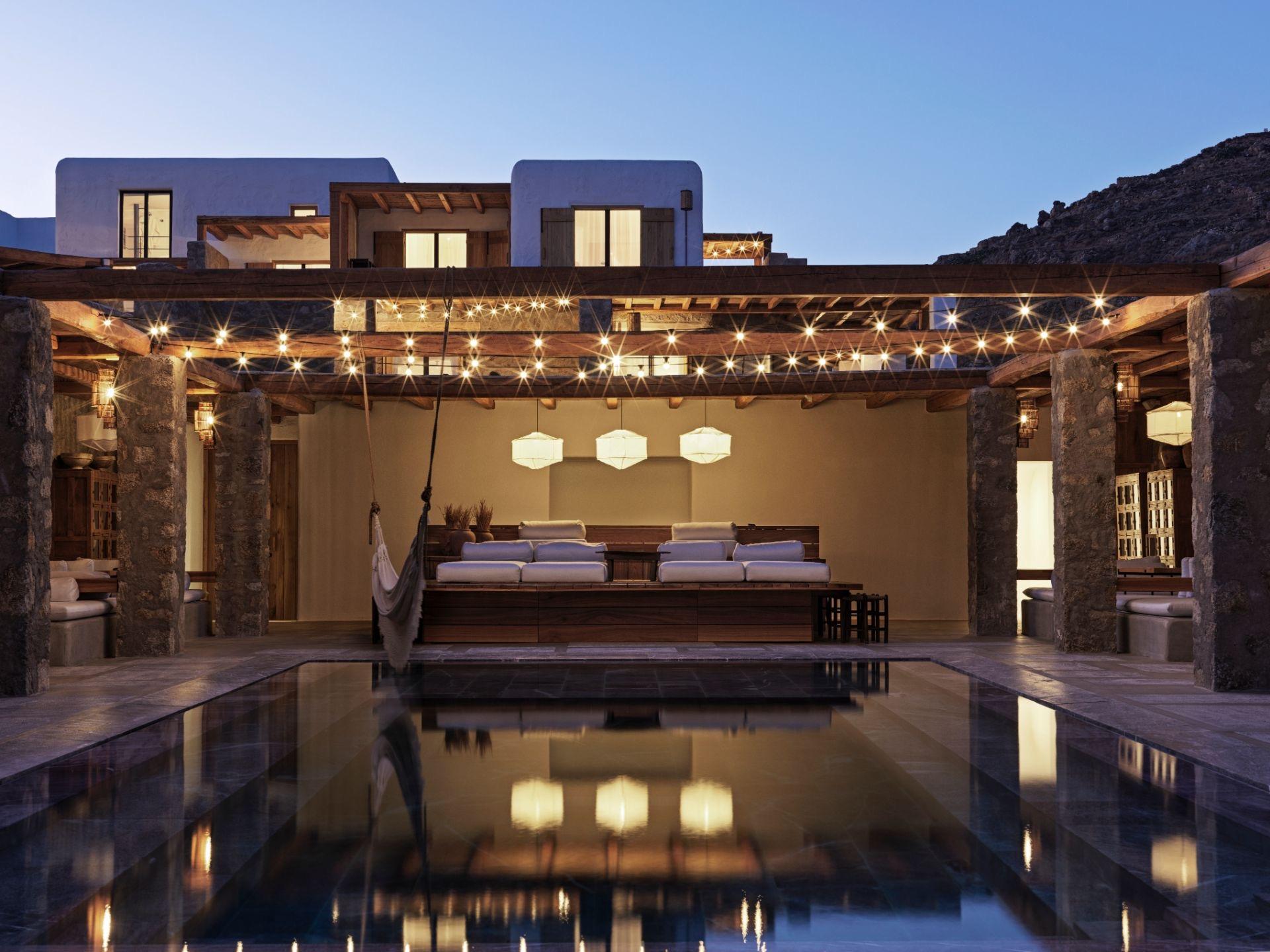 Grown-up
Nomad Mykonos
££££Mykonos, Greece
Fourteen suites in stone and whitewash at Kalo Livadi, each with a pool or a hot tub of its own, and a fire lit beside the shared pool after dark.
 Grown-up
The TownHouse Hotel Mykonos
££Mykonos, Greece
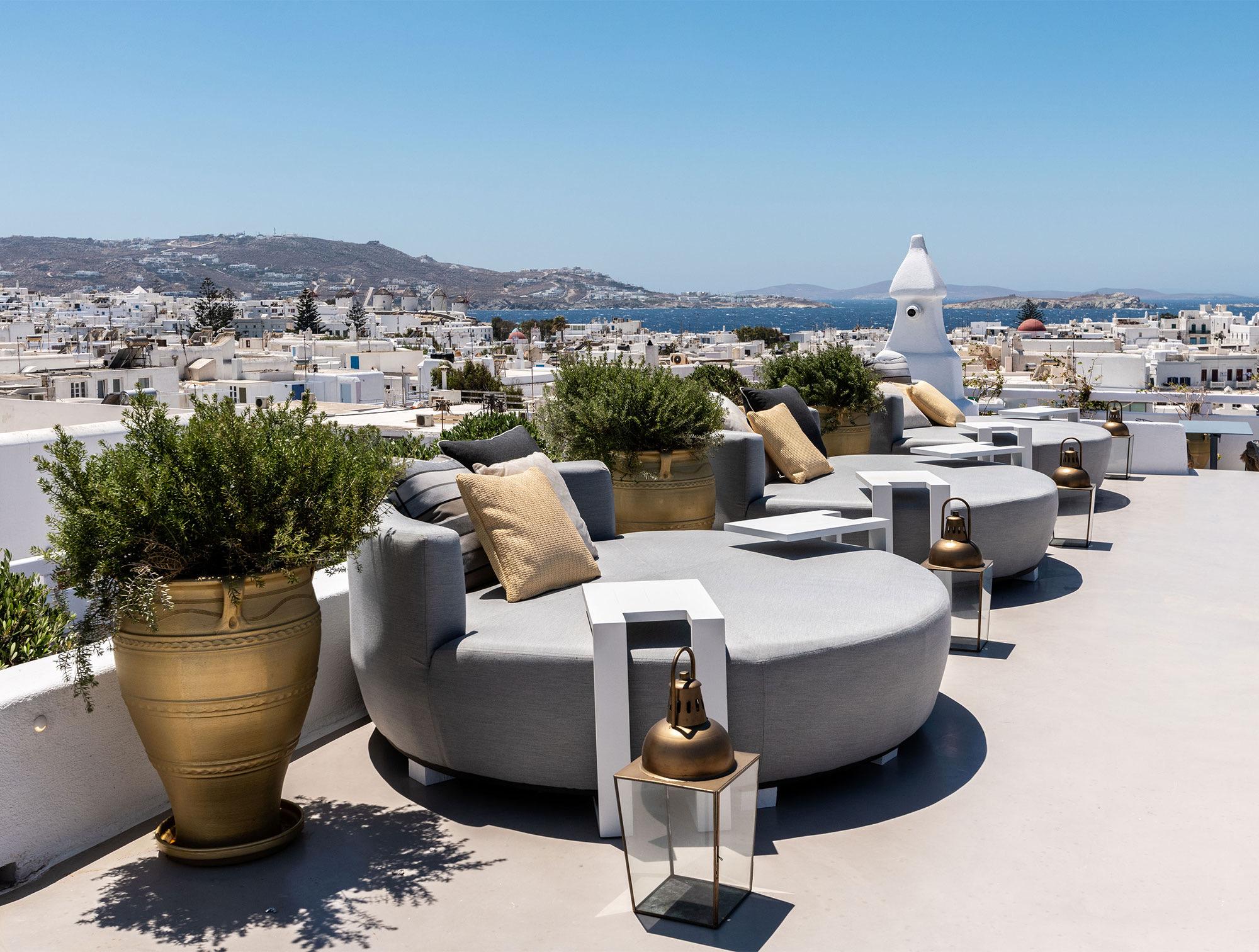
The eighteenth-century house of the first mayor of Mykonos, now twenty rooms for adults in the old town, with cocktails on the roof and more on the breakfast menu.
Where to eat
2 restaurants