
Portugal
Comporta
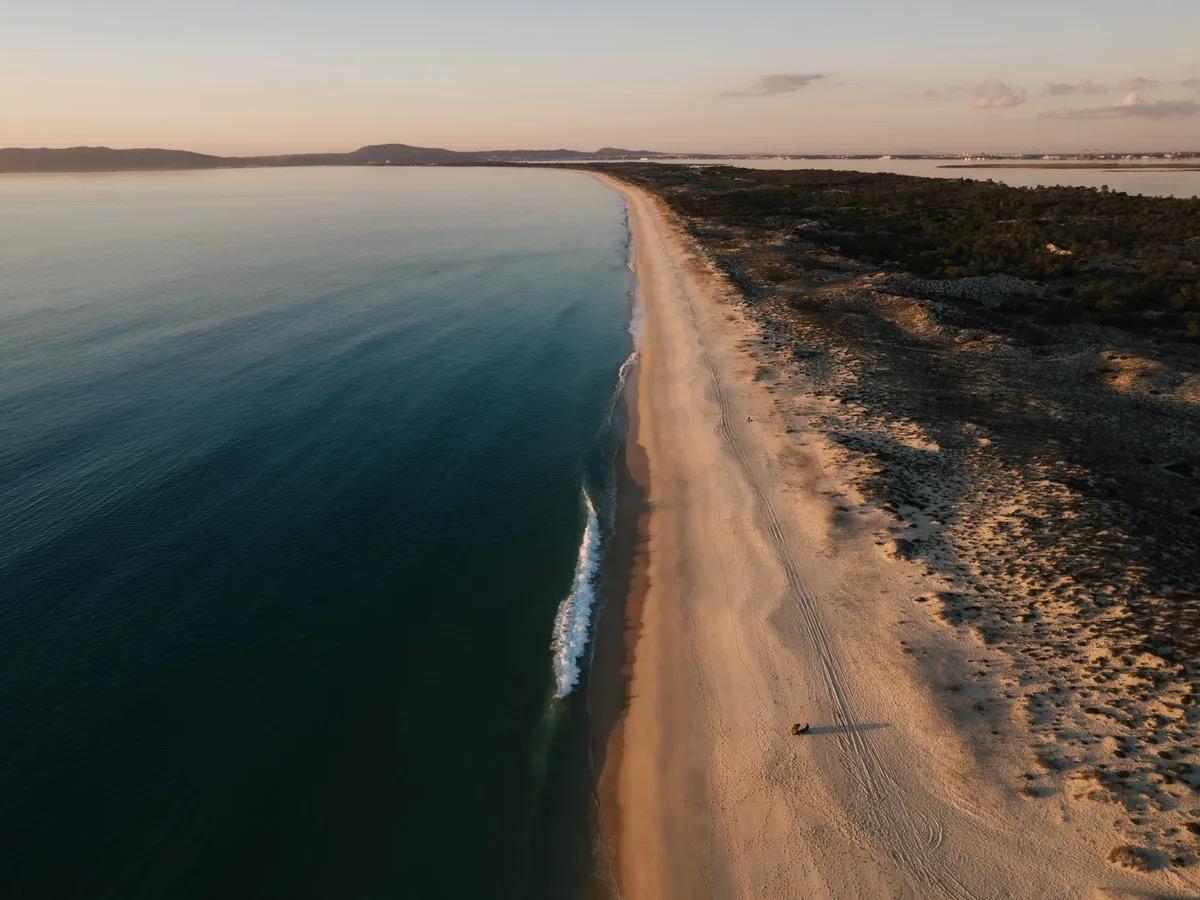
Comporta takes its name from an old word for the sluice gate that holds the water back on the rice fields, and the rice is still grown. Rice farming and shellfish fishing are what the area lives on, and behind some sixty kilometres of wide Atlantic sand, an hour and a half south of Lisbon, the paddies and their canals run out into dunes and forests of pine and cork oak, much of it inside the Sado Estuary Nature Reserve. The village is small and built low, its old fishermen's cottages now boutiques and barefoot cafés. There is no resort strip, and the pace is slow mostly because there is so little here to hurry towards. Even in August the beach rarely feels crowded.
The months to go are May and June, or September and October, warm enough for the beach without the summer's crowds and prices. July and August are the peak, the busiest and dearest weeks of the year, with every shop and restaurant open and the mosquitoes out as well. From November to February it stays mild, roughly 10 to 16°C with some rain, and quiet enough for the surfers who come for the winter swells, though many places close or cut their hours.
Comporta itself is the place to stay for anyone who would rather walk than drive: the grocery and the boutiques are a few minutes on foot, and Praia da Comporta is about a kilometre off over flat ground. Bicas, the hamlet in the pines just behind the village, counts as Comporta too. Carvalhal, to the south, is the quieter village, with pine estates around Muda inland of it and the easiest beach of the three to reach. Pego has the quietest beach, backed by pine forest. Out in the pines every beach is a drive, and a car is not optional.
The rice is best seen at either end of the day, on foot or by bike along the paddies between Carvalhal and Comporta, when the flooded fields hold the sky. A guided ride goes out on horseback across the paddies and through the pines to the sand. Praia da Comporta is wide and backed by dunes, with the Atlantic arriving in strong waves; the surf lessons are at Carvalhal, and at Pego, where the water is calmer. In the village, Cavalariça has oysters from the Sado. Ten minutes' drive away, at Carrasqueira on the estuary, the fishermen's pier stands on wooden stilts, and the storks and flamingos gather there. It is a fishermen's pier, and they got the sunset thrown in.
- Best months
- May, June, September and October
- Avoid
- July and August, the busiest and priciest weeks of the year
- Nearest airport
- Lisbon Humberto Delgado Airport (LIS)
- Transfer
- about 90 minutes by road from Lisbon
Neighbourhoods
- Pego
Where to stay
4 hotels
4 hotels
 Grown-up
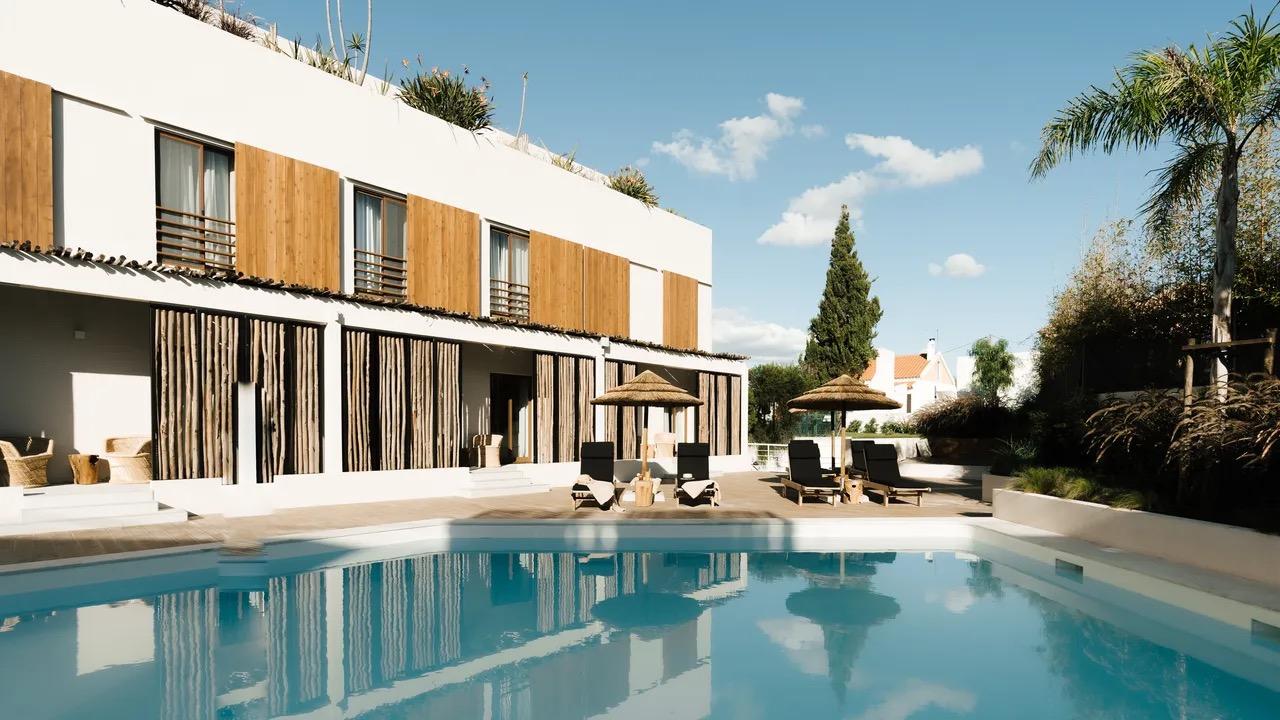
AlmaLusa Comporta
££Comporta, Portugal
A roof bar over the rice fields, and the beach a flat fifteen-minute walk away, at the one hotel in the middle of Comporta village.
 Grown-up & family
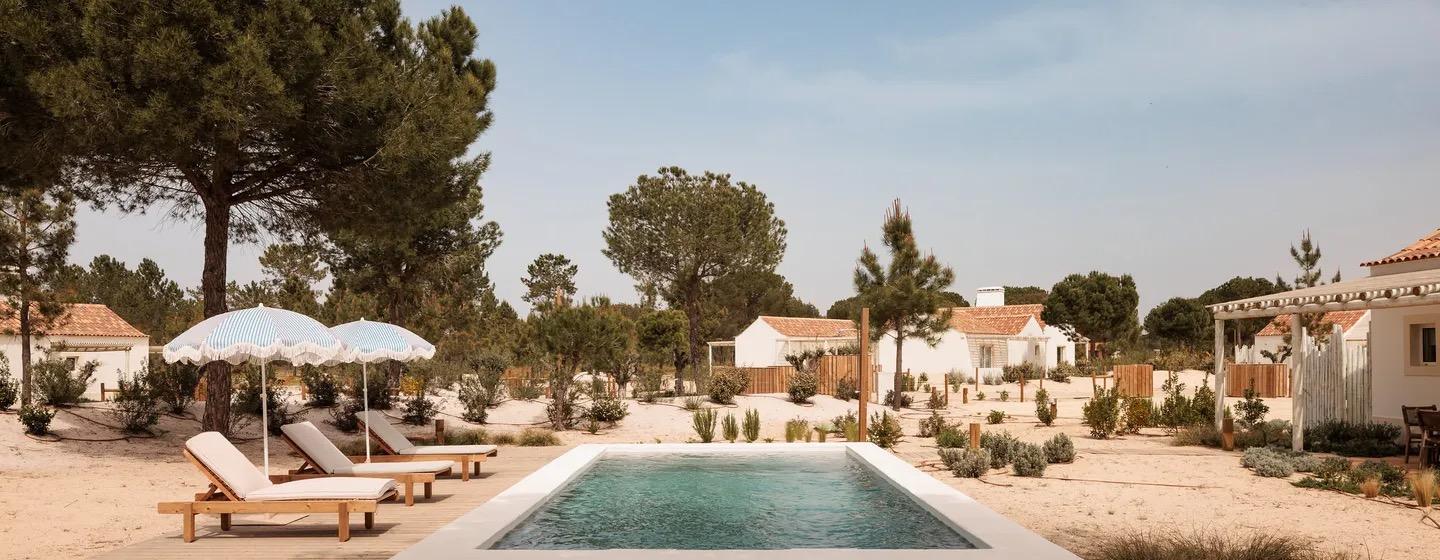
Independente Comporta
££Comporta, Portugal
Whitewashed houses under terracotta roofs, set out like a village in 12 hectares of pine outside Comporta, with a saltwater pool where the square would be.
 Grown-up & family
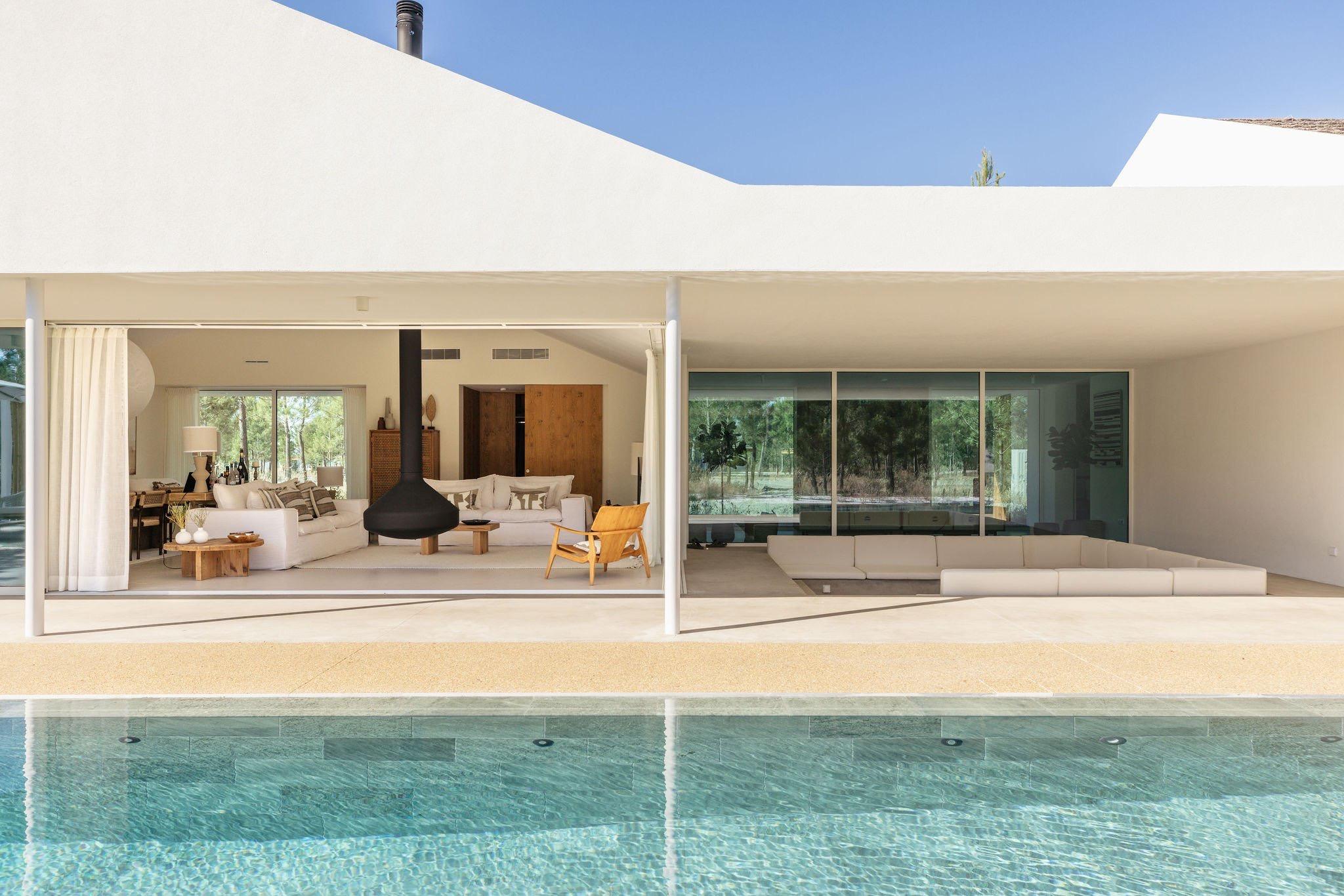
Spatia Comporta
££Comporta, Portugal
In 170 hectares of pine forest near Comporta, a two-bedroom villa gets a hectare to itself and the four-bedroom gets two.
 Grown-up & family
Sublime Comporta
££££Comporta, Portugal
Cabins on stilts over an untreated natural pool in the umbrella pines outside Comporta, with a ladder from each deck straight down into the water.
Where to eat
3 restaurants
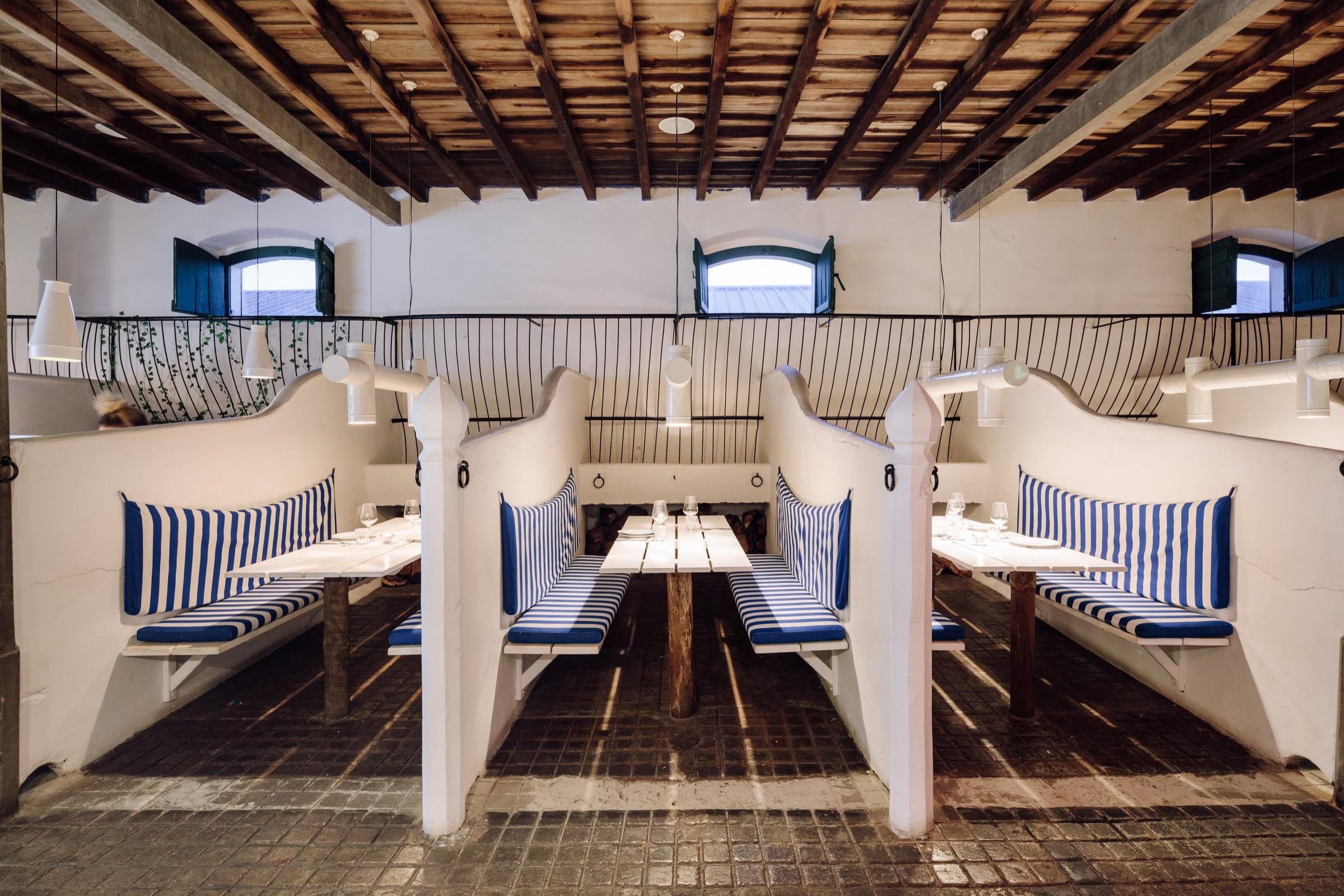
Cavalariça
££ · Recommended
Comporta · contemporary Portuguese
Shared plates of contemporary Alentejo cooking in a 17th-century stable at the heart of the village.
Reviewed in the Michelin Guide
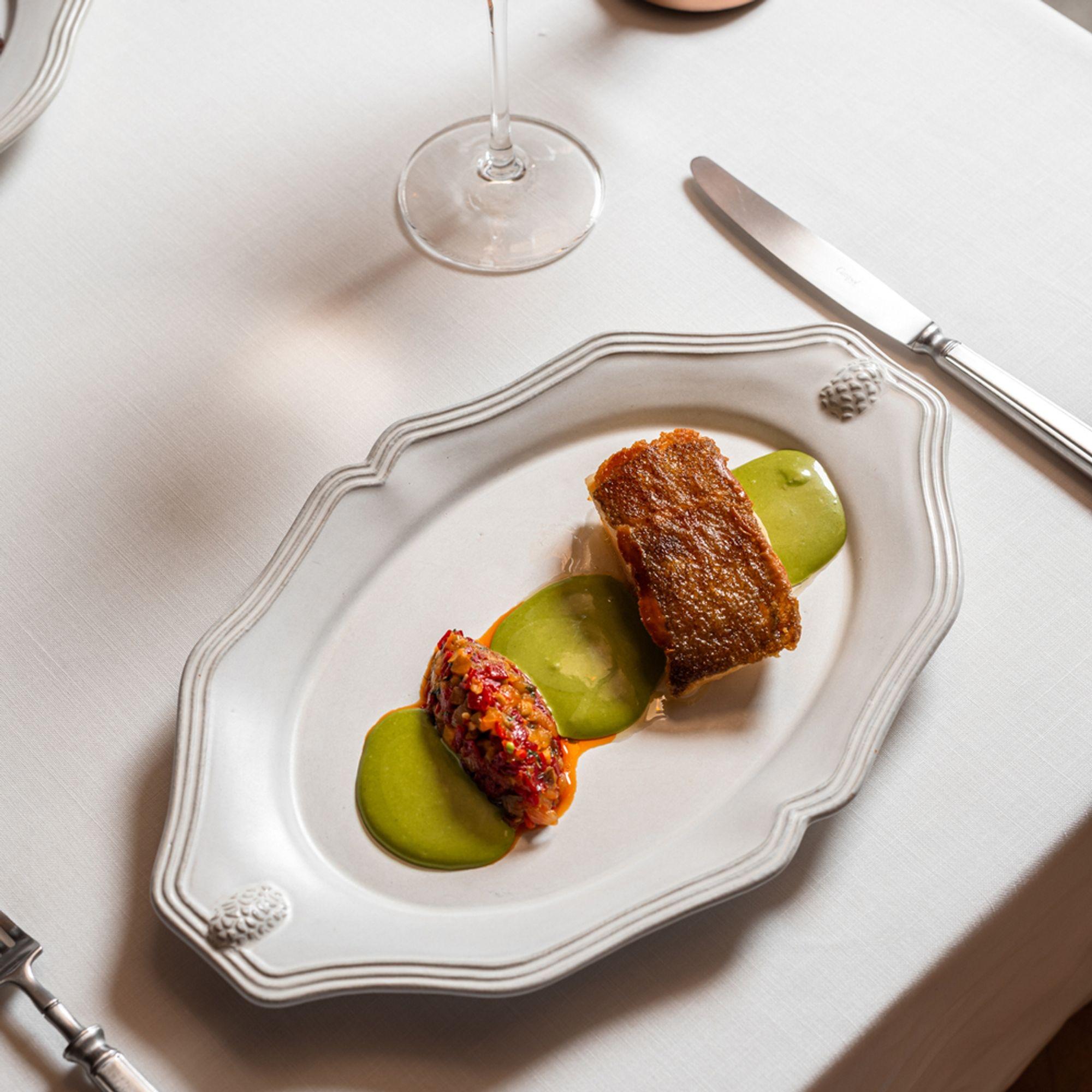
Sem Porta
£££ · Recommended
Carvalhal · Portuguese
A five-course tasting menu from Sublime Comporta's own garden, served in a glass-fronted room off the hotel's main building.
Reviewed in the Michelin Guide
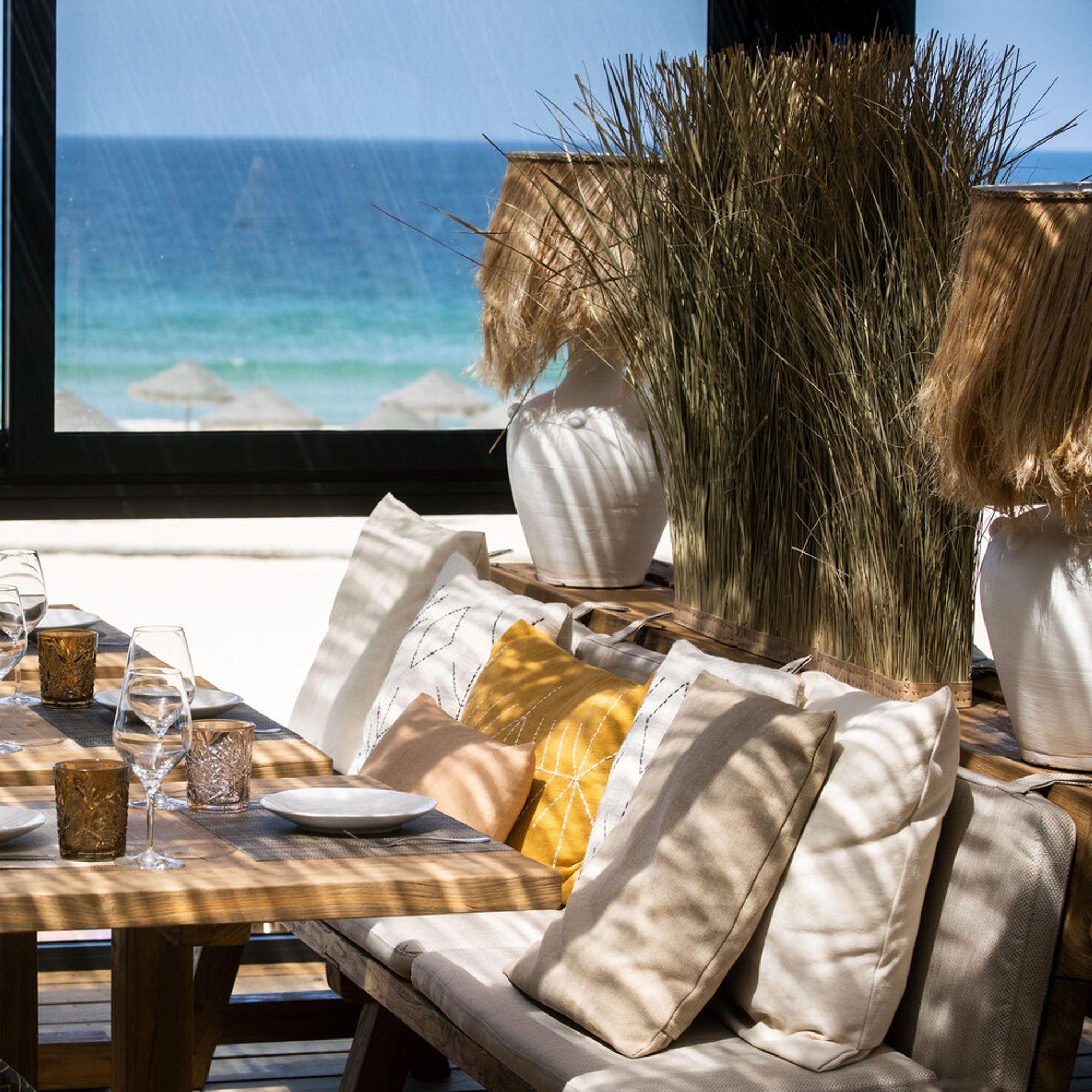
Sublime Comporta Beach Club
££ · Recommended
Carvalhal · seafood
Fish grilled to order off the day's catch on ice, at the end of a dune walkway to Carvalhal beach.
Reviewed in the Michelin Guide